Oklahoma State University, The Best Students, The Best State UniversitySoil Nutrient Management
SOIL 4234


Soil Nutrient Management, Oklahoma State University
Soil Nutrient Management

Salinity Lab

Saline Soil is characterized by

 > 2,600 ppm Soluble salts or an  EC 4mmhos/cm

Sodic or Alkali Soil is characterized by
> 15% of the cation exchanges sites occupied by Na.

1mmhos/cm = 1mS
1dS=100mS=100000µS

Related Links
Managing Saline Soils

Saline Soil RECLAMATION Example!!!!

Relative Information

SALINE SOILS

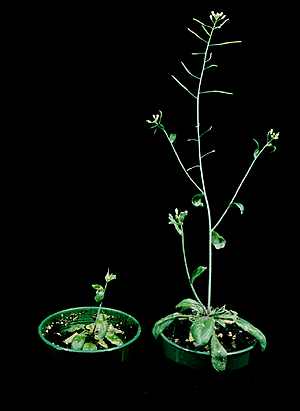
Major characteristic: contain high enough concentrations of soluble salts to interfere with plant growth and development.  

Chemistry: Ions in soluble salts are weakly bound and strongly attracted to water.

Accumulation of soluble salts in soil decreases water availability to plants. Common salts present: NaCl, Na2SO4, Na2CO3, NaHCO3, MgSO4, CaSO4, CaCO3.

 Properties:

-         remain moist longer

-         occupy poorly drained areas

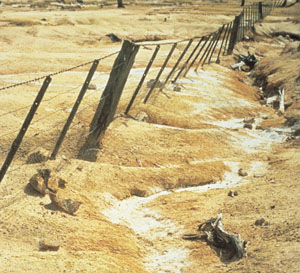
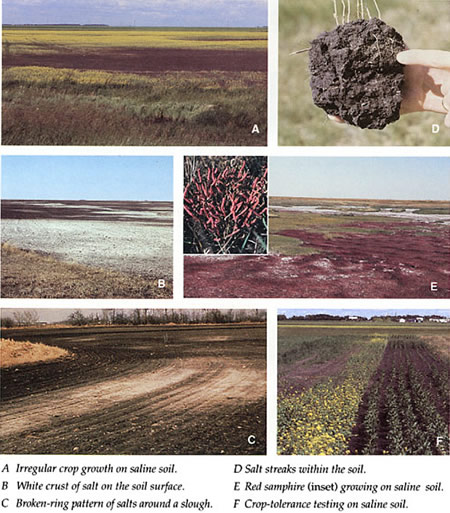
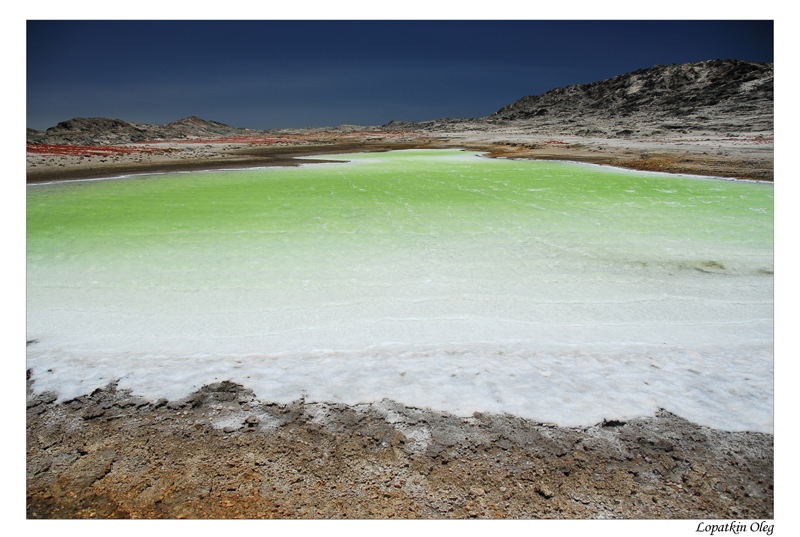
-         have a white surface layer of salt after drying

-         occur in semi-arid, temperate regions with rainfall adequate to support chemical weathering, but not sufficient to wash the soluble salts out.


Measurement of soluble salts content: Ions derived from the soluble salts present in the soil allow electricity to pass through (the more ions the greater the EC).

Thus: Soluble salt content is measured by

-         saturation of soil sample with water

-         extracting the water and the dissolved salts

-         measuring the ability to conduct electricity.


Salinity: accumulation of free salts to such an extent that it leads to degradation of soils and vegetation. Sodium Absorption Ratio (SAR):  SAR of 13 from a saturated soil extract is comparable to 15% of the adsorption sites being occupied by Na+.


Saline soil: EC>4 deciSiemens/meter (dS/m), SAR<13 (The U.S. Salinity Laboratory).

Soils classified saline: extract of saturated paste has an EC≥4,000 mhos/cm.

At this EC value, soil contains approximately 2600ppm soluble salts.


Reclamation:

-         leaching of soluble salts out of the soil by using good quality irrigation water

-         create good drainage (both surface and internal)

-         incorporation of organic matter

-         avoid deep tillage

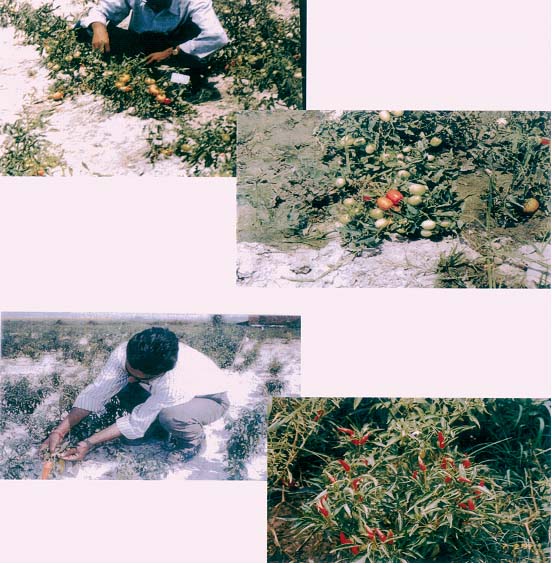
-         plant salt tolerant species (bermudagrass, barley).

SODIC SOILS

Major characteristic: contain abnormally high levels of exchangeable sodium (Na+).


Chemistry: Na+ is absorbed on cation exchange sites of clay and humus. Na+ attracts water; large shell of water around Na+ prevents it from neutralizing the negative charges of clay and humus. Absorbtion of large quantities of Na+ cause clay particles to repel each other (disperse). Clay and humus particles form a suspension, when dispersed.


Sodicity: a measure of exchangeable Na+ in relation to other exchangeable cations; expressed as the Exchangeable Sodium Percentage. ESP is calculated as the proportion of the cation exchange capacity occupied by the sodium ions and is expressed as a percentage. Sodicity index: 0-5 = non-sodic, 5-15 = sodic, >15 = strongly sodic. Sodic soil: SAR >13; EC<4 deciSiemens/meter (dS/m) (The U.S. Salinity Laboratory)

Soils classified sodic: contain more than 15% of exchangeable Na+.


Properties:

-         have poor internal drainage

-         moist/wet surface soil and dry subsoil

-         weak structural stability

Effect on plant growth:

-         toxicity to sodium-sensitive plants

-         nutrient deficiencies or imbalances

-         high pH

-         low nutrient/water availability due to poor soil physical quality

Reclamation:

-         same as reclamation of saline soils discussed above, plus:

-         addition of calcium-based soil amendments (gypsum, calcium chloride)

SALINE and SODIC SOILS

Soils can be naturally saline and/or sodic due to:

-         high salt concentration in the parent material

-         marine deposits

-         inadequate drainage


Agricultural practices:

-         dryland: deforestation/loss of native vegetation causes water table to raise (dissolved salts are carried from the bedrock to the soil surface)

-         irrigation: excessive irrigation, bad irrigation water quality (due to salts present in irrigation water + evaporation)

SALINE SODIC SOILS

“Double Trouble”:

-         contain high enough concentrations of soluble salts to interfere with plant growth and development

-         contain abnormally high levels of exchangeable sodium (Na+)


Reclamation:

-         takes several years

-         requires 2 or more pore volumes of good quality irrigation water.


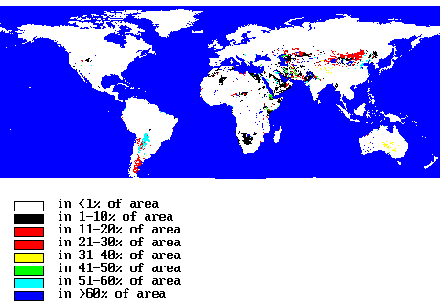
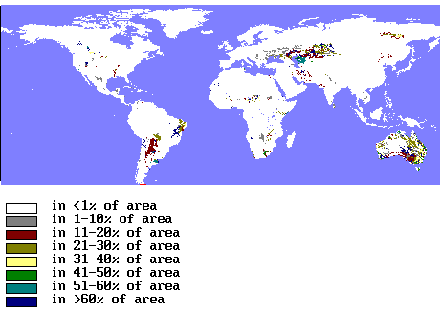
Saline Soils of the World

Salt-affected lands are reflected as saline seeps in dryland agriculture and secondarily salinized irrigated lands (Tanji 1995). Table 2 shows that globally more than 77 million ha of land is salt-affected by human-induced salinization (Oldeman et al. 1991). The authors have not distinguished between the extent of salt-affected land in irrigated and non-irrigated areas.

Sodic Soils of the World
http://www.fao.org/ag/agl/agll/spush/topic2.htm


Comprehensive information on Nitrogen Use Efficiency for cereal crop production